
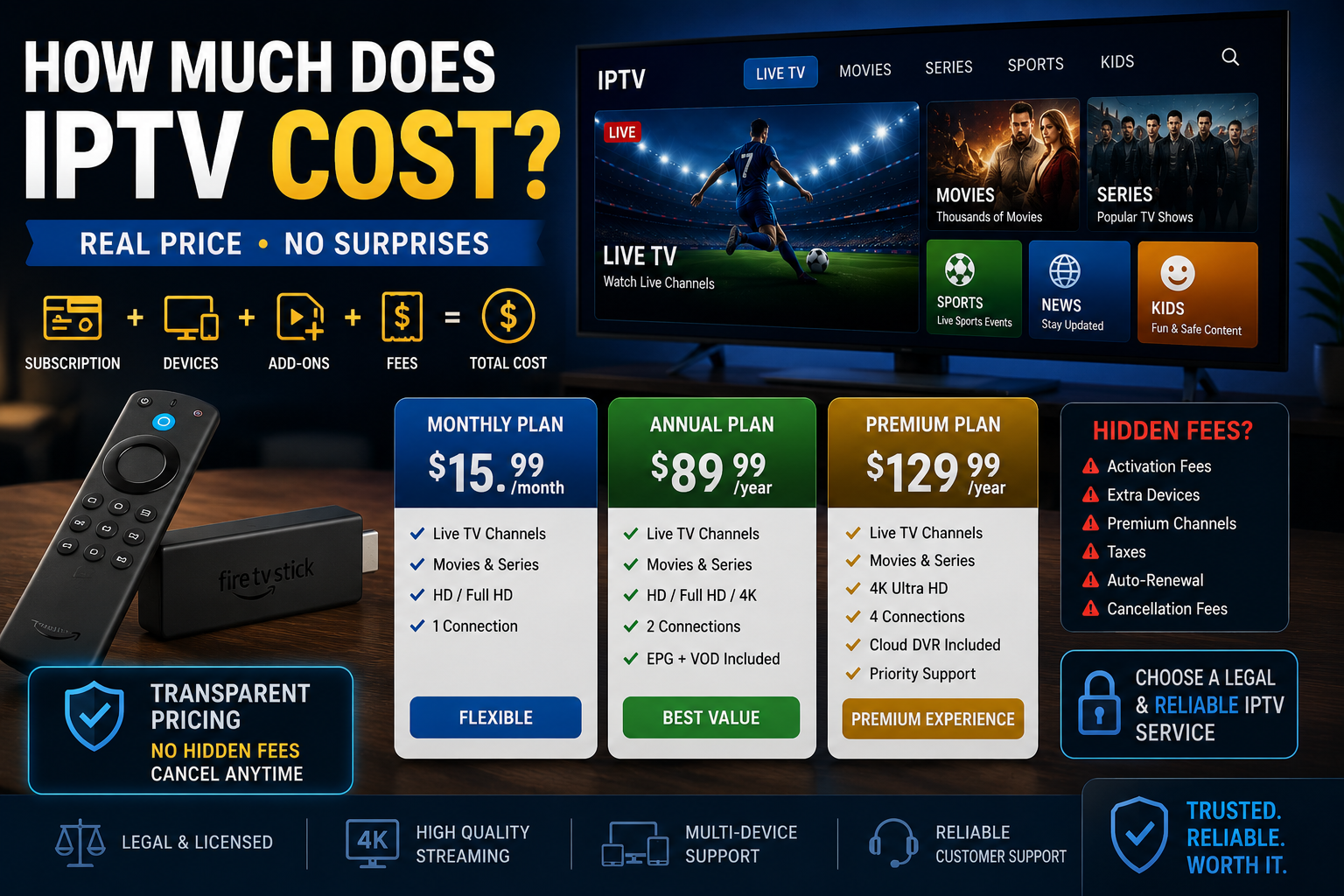
IPTV Cost: What You Really Pay
IPTV can look cheap at first, but the real iptv cost is more than the price on a plan page. The full bill includes the service fee, internet quality, device setup, app access, add-ons, support, and the risk of using an unlicensed provider. This guide explains how IPTV pricing works, what changes the cost of IPTV, and how to compare plans without falling for offers that sound too good to be true.
What does IPTV actually cost?
IPTV cost depends on the type of service you choose, the channels or content included, the number of devices you want to use, and whether the provider is licensed to distribute the programming. A legitimate IPTV subscription cost may seem higher than a bargain offer, but it often covers content rights, servers, customer support, app support, and service stability. A low cost iptv service can look attractive, but if it lacks licensing, clear terms, or reliable support, the savings may bring outages, poor quality, or legal and security risks.
In simple terms, IPTV is TV delivered over the internet rather than through cable, satellite, or broadcast. That can make it more flexible for smart TVs, streaming boxes, tablets, and phones. Still, flexibility does not mean every IPTV option is safe, legal, or good value.
When people search for iptv cost usa, iptv cost per year, or best iptv paid options, they are asking the same main question: what will I really pay, and what do I get for it? The answer is always more than the headline price.

The main factors behind IPTV pricing
IPTV pricing varies because providers bundle content, tech, and support in different ways. Two services may both call themselves IPTV, but one may be a licensed streaming TV platform with clear billing, while another may be an unofficial playlist seller with little accountability. The monthly fee only makes sense when you know what is included.
Content access and licensing
Content rights are one of the biggest drivers of lawful IPTV pricing. Live sports, premium channels, international networks, movies, and on-demand libraries all need distribution deals when sold legally. A licensed provider has to pay for access, stay compliant, and deliver streams at scale.
This is why very cheap packages that claim to include thousands of premium channels from many countries should be treated with care. The issue is not only whether the channels work today. It is whether the provider has permission to sell them. The legality of iptv depends on licensing, distribution rights, and how the service gets and delivers its streams.
Stream quality and reliability
A lower subscription price may not feel like a deal if the stream freezes during a match, buffers every evening, or drops channels without warning. Reliable IPTV needs servers, bandwidth, monitoring, updates, and maintenance. Those costs show up in better services.
Quality also includes details such as HD or 4K, catch-up TV, program guides, subtitles, and smooth playback across devices. If you want easy viewing, the cheapest plan may not be the best value.
Device support and household use
Some providers charge based on how many devices or live streams you need. A single viewer on one TV has different needs from a home with several screens. If a plan allows only one connection at a time, adding extra users can raise the total cost.
Before choosing a provider, check whether your smart TV, streaming stick, Android box, phone, tablet, or computer is supported. Also confirm whether the plan includes multi-device access or charges extra for it.
Customer support and account safety
Good support costs money, but it saves time and stress. If your app will not load, your login stops working, or your payment fails, fast support matters. A provider with clear help channels, account tools, and setup guides is usually safer than one that only uses temporary messages or hidden social accounts.
Security is another hidden cost. Some unofficial providers push users toward unknown apps, odd payment methods, or risky downloads. Even if the price looks low, putting your device or payment data at risk can become expensive in another way.
The difference between monthly and yearly IPTV costs
The iptv cost per year is not always just the monthly fee times twelve. Some providers offer annual discounts, while others charge extra for setup, more connections, premium categories, app access, or device setup. A yearly deal can be good value if the provider is trustworthy, but it is risky if you have not tested the service first.
A monthly plan gives you flexibility. You can cancel if the channel list, stream quality, or support does not meet your needs. The tradeoff is that monthly billing usually costs more over time than a longer plan.
A yearly plan may lower the average monthly cost, but it raises your commitment. If the provider changes its channel list, has outages, shuts down, or does not support your device, you may have little recourse. That matters even more with new or unfamiliar services.
Before paying for a full year, consider this quick check:
- Test the service first. Use a short plan or trial if one is offered, and test it when you actually watch TV.
- Check your must-have channels. Do not assume every package includes the exact sports, local, news, or international channels you want.
- Check peak-hour performance. A service that works in the afternoon may struggle during prime time or live events.
- Review cancellation terms. Know whether refunds, renewals, and account changes are clearly explained.
- Avoid pressure tactics. Be careful if a seller pushes a long deal before you can check quality.
For many viewers, the best path is to start monthly, check reliability, and only then consider a longer plan if the provider is clear and legal.
IPTV cost in the USA and other markets
Searches for iptv cost usa often come from viewers comparing IPTV with cable, satellite, or mainstream live TV streaming services. In the United States, total cost can vary a lot because channel rights, local stations, regional sports, premium networks, and taxes or fees may differ by provider. A legal service with major channels and live sports usually has higher operating costs than a basic niche service with limited programming.
The same idea applies in other markets. People comparing uk iptv providers should pay close attention to licensing, channel rights, device support, and customer support. A provider marketing UK channels does not automatically mean it has permission to distribute them, especially if it sells very large channel bundles at very low prices.
Location also affects the experience. Even if the service runs online, content access may depend on regional rights. Some platforms limit channels or libraries by country, and some may require a specific billing location. If a provider is vague about where it operates legally, that is a warning sign.
When comparing markets, avoid focusing only on which country has the cheapest IPTV. Instead, compare:
- Whether the service is licensed in your region
- Whether it carries the channels you actually watch
- Whether your internet speed and home network can support it
- Whether the provider has clear billing and cancellation policies
- Whether the app experience is stable on your devices
A slightly higher monthly fee can be worth it if it gives you lawful access, reliable streams, and dependable support.
Is low-cost IPTV worth it?
Low-cost IPTV is worth considering only when the provider is open, legal, secure, and able to deliver the channels and quality you need. A cheap plan is not automatically bad, but a very low price paired with huge channel claims, unclear ownership, or poor support should make you pause. The real value of IPTV is not the lowest possible number. It is the best balance of cost, legality, reliability, and viewing experience.
The appeal of a low cost iptv service is easy to understand. Nobody wants to overpay for entertainment, especially if they watch only a few channels or just want live events now and then. But the cheapest option can create problems that do not show up on the checkout page.
Common issues include buffering, missing channels, limited device support, poor program guides, sudden account shutdowns, and no useful refund process. There can also be privacy and security concerns if the provider asks for odd payment methods or tells you to install unfamiliar software from outside trusted app stores.
A better way to judge value is to ask what you need the service to do. If you mainly want a few legal live channels, a smaller licensed plan may be smarter than a huge bundle. If live sports matter most, reliability during busy events matters more than the number of channels advertised.
Understanding the legality of IPTV
The legality of iptv is one of the most important parts of the total cost discussion. IPTV technology itself is legal; many lawful streaming and TV services use internet protocol delivery. The legal issue is whether the provider has the rights to distribute the channels, movies, sports, or shows it sells.
A licensed IPTV or streaming TV provider usually has clear branding, clear terms of service, proper billing, official apps or trusted app support, and support documents. It does not need to hide what it offers or make unreal claims about endless premium content for a tiny fee.
An unauthorized provider may offer copyrighted channels or events without permission. Even if the user experience looks similar, the rights behind it are not the same. Viewers should avoid services that appear to resell premium content without permission, especially when the offer sounds unreal.
Practical warning signs include:
- Huge channel counts with no clear note on licensing
- Premium sports, movies, and international channels bundled for a very low fee
- No company details, terms, privacy policy, or support structure
- Payment requests through informal or hard-to-dispute methods
- Instructions to install unknown apps from unverified sources
- Claims that legal rules do not matter or cannot apply
This is not legal advice, but it is a practical rule: choose providers that are clear about who they are, what they sell, and where they are allowed to operate.
App costs and the IPTV Smarters Pro question
Many people search for iptv smarters pro cost because they mix up the app with the IPTV service itself. IPTV Smarters Pro is commonly used as a player or interface for IPTV credentials, playlists, or provider portals, depending on the setup. The app may have its own access rules, features, or payment structure depending on the platform, but it does not automatically include a content subscription.
That difference matters. Paying for an app does not mean you have paid for legal channels. Likewise, paying an IPTV provider does not always mean every app feature is included. You may need to think about both the player and the content subscription separately.
When you compare app-related costs, ask:
- Does the provider have its own official app, or does it require a third-party player?
- Is the app available from a trusted app store for your device?
- Are premium app features required for the experience you want?
- Will the provider help with setup if the app does not work?
- Does the app support EPG, catch-up, favorites, and multiple profiles?
The app is part of the user experience, but it is not the same as content rights. A smooth player can make IPTV easier to use, but the service behind it still needs to be legal, stable, and properly licensed.
What should be in a fair IPTV subscription cost?
A fair IPTV subscription cost should include reliable access to the content you are paying for, clear setup instructions, reasonable stream quality, secure account handling, clear billing, and support when something goes wrong. The exact price can vary, but the provider should make it easy to see what is included before you pay. If key details are missing, the true cost may be uncertainty.
A good IPTV offer should not require guesswork. You should know whether the plan includes live channels, video on demand, catch-up TV, multiple connections, premium categories, or international packages. You should also know how renewals work and what happens if you cancel.
Look for these points when comparing the best iptv paid options:
-
Clear channel details
The provider should describe the type of content included without leaning only on inflated channel counts. A smaller, accurate list is better than a huge list that changes all the time or includes channels that do not work.
-
Reliable viewing quality
Stream quality should be steady enough for your normal habits. If you watch live sports or news, stability matters even more because delays and buffering are easy to notice.
-
Clear device rules
You should know how many devices can connect and how many streams can run at once. That keeps surprises away after setup.
-
Straight billing
A legal provider should make pricing, renewals, cancellation, and support easy to understand. Confusing payment terms are a sign to slow down.
-
Helpful support
Support does not need to be instant, but it should be easy to reach and professional. Setup guides, troubleshooting steps, and account help all add value.
Hidden costs many viewers overlook
The cost of iptv can go beyond the subscription itself. Even with a fair plan, you may need better internet, a compatible device, or extra services to get the experience you expect. These costs are not always obvious when you first compare plans.
Internet speed and home Wi-Fi
IPTV depends on your internet connection. If your home network is slow, crowded, or weak, a good provider may still perform poorly. Upgrading your internet plan, router, or Wi-Fi range can add to the total cost.
This matters even more for larger households. Multiple people streaming, gaming, video calling, or working from home can compete for bandwidth. If IPTV becomes your main TV source, your network needs to support it well.
Streaming devices and accessories
Some smart TVs support IPTV apps well, while others can feel slow or limited. You might need a streaming stick, Android TV device, set-top box, or new remote for a better experience. These are usually one-time costs, but they still affect your first-year budget.
Also think about Ethernet adapters, HDMI cables, or storage if your setup needs them. Small purchases can add up, especially if you are setting up several rooms.
Premium add-ons and extra connections
The plan you see may not include everything you want. Sports packages, movie libraries, adult content blocks, international bundles, or more connections may cost extra. Always confirm whether the price shown is the full price for your household’s needs.
If you see one low monthly number, ask what is not included. The most realistic IPTV budget includes the base plan plus any extras you will actually use.
Time and troubleshooting
Time is a cost too. A service that needs constant playlist updates, app changes, support messages, or troubleshooting can become frustrating. Paying a bit more for a stable service may be worth it if it saves you from regular technical problems.

A practical way to estimate your yearly IPTV budget
To understand iptv cost per year, build a simple yearly estimate instead of looking only at the monthly fee. Start with the subscription, then add the likely extras that apply to your setup. This gives you a more realistic comparison with cable, satellite, or other streaming services.
Use this checklist:
- Base IPTV plan: Multiply the monthly fee by twelve, or note the yearly plan price if one is offered.
- Extra connections: Add any cost for more simultaneous streams or household users.
- App or player fees: Include any app-related charge if your device needs it.
- Device purchases: Add streaming boxes, sticks, adapters, or remotes you need to buy.
- Internet upgrades: Include any rise in your broadband bill if IPTV pushes you to upgrade.
- Premium add-ons: Add sports, international, movie, or specialty packages you truly plan to watch.
- Replacement risk: Be careful with long-term payments to unproven providers, since losing access can force you to pay again somewhere else.
This exercise shows whether an IPTV offer is truly affordable or only looks cheap at first. It also makes comparisons fairer. A low monthly plan plus device upgrades and extra connections may end up close to a mainstream service.
How to compare IPTV providers without getting misled
The IPTV market can be confusing because different sellers use the same words to describe very different services. Premium, best, full access, and all channels are marketing terms unless they are backed by clear details. A careful comparison protects both your budget and your viewing experience.
Start with your viewing priorities. Do you need local channels, live sports, children’s programming, international channels, movies, or catch-up TV? A service is only good value if it fits your real habits.
Then compare providers using practical points:
-
Trust first
Do not let price override licensing concerns. If a service cannot explain its rights or runs hidden, move on.
-
Channel relevance over channel count
Thousands of channels do not matter if the few you watch are missing or weak. Focus on your must-have content.
-
Device support
Confirm that the service works well on the devices you already own. If it requires new hardware, include that in your budget.
-
Trial or short-term access
A short test period can show buffering, missing channels, app issues, and support quality before you commit.
-
Support quality
Send a pre-sale question and note how the provider responds. Clear, helpful communication before purchase often signals better help after purchase.
-
Billing clarity
Avoid providers that hide renewal terms, make cancellation hard, or push only long-term plans.
-
Security practices
Prefer trusted apps, safe payment methods, and clear privacy policies. Avoid downloads or steps that feel risky.
The real meaning of best paid IPTV
The best iptv paid service is not always the one with the biggest channel list or the lowest subscription price. It is the one that legally and reliably delivers the content you actually watch, on the devices you use, at a price that makes sense over the full year. A good paid service reduces uncertainty.
For some viewers, that may mean a mainstream live TV streaming platform with known licensing and polished apps. For others, it may mean a niche service focused on specific international or specialty content. The right choice depends on your viewing habits, region, budget, and tolerance for setup work.
A strong paid IPTV option should make everyday viewing easier, not harder. You should not need to wonder whether the service will disappear, whether your channels are authorized, or whether your payment information is safe. Those worries are part of the true cost, even if they do not appear on the bill.
Smart ways to keep IPTV costs under control
You can manage IPTV costs without chasing risky offers. The key is to buy only what you need, avoid long-term commitments you do not need, and review your viewing habits often. Entertainment spending grows when people keep overlapping services they no longer use.
Try these practical steps:
- List your must-have channels before shopping. This keeps you from paying for oversized bundles.
- Start with a monthly plan. Test performance before you think about a yearly plan.
- Avoid duplicate services. If IPTV replaces another subscription, cancel what you no longer watch.
- Use existing devices when possible. Do not buy new hardware until you confirm support.
- Review add-ons every few months. Remove premium categories that sounded useful but rarely get watched.
- Prioritize legal services. A cheap unauthorized plan can create financial, security, and reliability risks.
- Check household needs honestly. Pay for extra connections only if several people will use them at the same time.
This approach keeps the budget realistic while still leaving room to choose quality. Saving money should not mean constant buffering, weak legality, or poor support.
Final takeaway
The true IPTV cost is a mix of subscription fees, app setup, devices, internet quality, add-ons, support, and legal confidence. A low advertised price may be tempting, but it only matters if the service is reliable, clear, and allowed to provide the content it sells.
Before choosing a provider, calculate the full iptv subscription cost for your household and compare it with your real viewing needs. The smartest choice is not just the cheapest plan. It is the service that gives you steady access, clear terms, safe setup, and the right content at a fair total price.
Q&A
Question: Why can two IPTV services have very different prices?
Short answer: IPTV prices vary because providers may be selling very different things. A lawful service often has costs tied to licensing, content rights, servers, app support, billing systems, customer service, and steady stream delivery. A very cheap service may skip some of those costs or may not have permission to distribute the content it advertises.
Question: Is a yearly IPTV plan always cheaper than paying monthly?
Short answer: A yearly plan may lower the average monthly price, but it is not always the safer or better deal. The real yearly cost can include app fees, extra connections, device upgrades, add-ons, and internet changes. It is usually smarter to test a service with a monthly plan or trial before you pay for a full year.
Question: Does paying for IPTV Smarters Pro include IPTV channels?
Short answer: No, not by itself. IPTV Smarters Pro is commonly used as a player or interface, but it does not automatically include a legal content subscription. You may still need to pay a separate IPTV provider, and that provider still needs the right to distribute the channels or content it offers.
Question: What are the biggest warning signs of a risky IPTV provider?
Short answer: Major warning signs include huge channel lists at very low prices, no clear company details, vague licensing claims, poor or hidden support, informal payment methods, and instructions to install unknown apps. These signs can point to reliability, security, legal, or refund risks.
Question: What is the best way to estimate the true cost of IPTV?
Short answer: Add up the full household cost, not just the advertised subscription. Include the base plan, extra live streams, app or player fees, device purchases, internet upgrades, premium add-ons, and the risk of losing access if the provider is not reliable. That gives a fairer comparison with cable, satellite, or mainstream streaming services.
One Reply to “IPTV Cost: What You Really Pay”